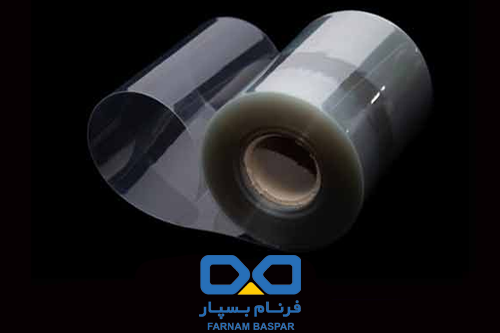
Transparent and brown PET sheet refers to a type of plastic material made from polyethylene terephthalate (PET) resin, commonly used in packaging, signage, and various industrial applications. While PET is typically transparent, the addition of brown pigment during the manufacturing process imparts a brown color to the sheet. This material retains the transparency characteristic of PET while offering a brown tint, providing aesthetic appeal and potentially serving specific functional or design purposes where clarity with a tint is desired, such as in displays or protective coverings.
Farnam Baspar’s PET sheet specifications
Farnam Baspar’s PET sheet is a high-quality transparent film made from non-crystalline polyethylene terephthalate (A-PET or PET-G). With excellent optical clarity, mechanical strength, and dimensional stability, it is ideal for packaging, printing, lamination, and light industrial applications. Its low moisture absorption, moderate chemical resistance, and good thermoformability add to its versatility. The following section outlines the product’s key technical specifications.
| PROPERTY | TYPICAL VALUE | TEST METHOD |
| MATERIAL TYPE | PET-G or A-PET (Amorphous PET) | - |
| THICKNESS RANGE | 0.2 – 1.5 mm | ASTM D374 |
| WIDTH | Up to 1200 mm | Manufacturer Spec |
| DENSITY | ~1.33 – 1.38 g/cm³ | ASTM D792 |
| TENSILE STRENGTH (MD) | 50 – 65 MPa | ASTM D638 |
| ELONGATION AT BREAK | 100 – 150% | ASTM D638 |
| LIGHT TRANSMISSION | ≥ 88% | ASTM D1003 |
| HAZE | < 5% | ASTM D1003 |
| HEAT DEFLECTION TEMP (HDT) | 65 – 70°C | ASTM D648 |
| SOFTENING POINT (VICAT) | ~80°C | ASTM D1525 |
| WATER ABSORPTION (24H) | < 0.5% | ASTM D570 |
| CHEMICAL RESISTANCE | Moderate to good (acids, oils) | ASTM D543 |
| SURFACE | Glossy / Smooth | Visual |
| FOOD CONTACT COMPLIANCE | FDA 21 CFR / EU 10/2011 (on demand) | Regulatory Spec |
The advantages of Farnam Baspar’s PET sheet
- High optical clarity, ideal for packaging, printing, and visual applications
- Excellent mechanical strength and impact resistance, even in thin gauges
- Stable dimensions under varying heat and humidity conditions
- Superior thermoformability, allowing precise mold shaping
- Low moisture absorption and moderate chemical resistance against oils, greases, and mild acids
- Food-contact compliance available upon request, suitable for indirect food packaging
- Fully recyclable material, contributing to environmental sustainability
Our PET Sheet standards
- Complies with ASTM D374 for precise thickness measurement
- Tensile strength and elongation tested according to ASTM D638 and ISO 527
- Density evaluated based on ASTM D792
- Water absorption tested under ASTM D570
- Heat deflection temperature (HDT) measured using ASTM D648
- Vicat softening point determined by ASTM D1525
- Light transmission and haze tested under ASTM D1003 for optical quality
- Chemical resistance assessed via ASTM D543 (oils, alcohols, weak acids)
- Food-contact grades comply with FDA 21 CFR and EU Regulation 10/2011 on request
The main applications of our PET sheet
- Clear packaging industry: Used for transparent containers, trays, protective covers, and retail boxes
- Thermoforming processes: Ideal for pharmaceutical blisters, decorative parts, and technical packaging
- Printing and lamination: Suitable for offset, silk-screen, and digital printing with excellent adhesion
- Light industrial & electronic applications: Thermal insulation, dielectric barriers, and protective films
- Laser cutting, die-cutting, and precision forming: For signage, POP displays, and decorative components
Transparent And Brown PET Sheet price
Several factors influence the price of transparent and brown PET sheets:
- Raw Material Costs: Fluctuations in the prices of raw materials, particularly PET resin and pigment additives, directly affect the manufacturing cost of PET sheets. Changes in oil prices, as PET is derived from petroleum, can also impact costs.
- Production Volume: Economies of scale play a significant role in pricing. Higher production volumes often result in lower per-unit production costs, allowing manufacturers to offer competitive pricing.
- Market Demand: Supply and demand dynamics within the PET sheet market influence prices. Increased demand for transparent and brown PET sheets relative to supply can lead to higher prices, while oversupply may lead to lower prices.
- Manufacturing Efficiency: Improvements in manufacturing processes, machinery, and technology can enhance efficiency and reduce production costs, potentially leading to lower prices for PET sheets.
- Quality and Specifications: PET sheets may vary in quality, thickness, transparency, and other specifications. Higher-quality or specialty PET sheets may command premium prices compared to standard options
How to purchase transparent and brown PET sheets from Farnam Baspar?
The Farnam Baspar Company is the largest manufacturer of transparent and brown PET sheets in Iran. All products of this company are offered with the highest quality and most suitable prices. If you intend to inquire about the price and purchase of transparent and brown PET sheets from Farnam Baspar, please contact the numbers provided on the website and receive the necessary consultations from our experts.
Frequently asked questions
What sizes and thicknesses are available for PET sheets?
- Standard Thickness Range
- 15 mm – 0.5 mm: Used for thermoforming films, blister packs, and food packaging (like cheese, bakery trays, salad containers).
- 5 mm – 2 mm: Suitable for stronger thermoformed trays, clamshells, and protective packaging.
- 2 mm – 6 mm: Used for industrial packaging, dividers, and semi-rigid applications.
- 6 mm – 12 mm (and up to 20 mm): Heavy-duty sheets for signage, printing, machine guards, and construction uses.
- Sheet Sizes (Flat Sheets / Rolls)
- Rolls (APET film): Common widths 500 mm – 1500 mm, length depends on roll diameter (can reach hundreds of meters).
- Flat Sheets:
- Standard size: 1220 × 2440 mm (4 × 8 ft)
- Also available: 1000 × 2000 mm, 2050 × 3050 mm, or custom-cut sizes.
- Colors / Surface Options
- Clear (transparent, high gloss) is the most common.
- Can also be supplied in opaque, matte, anti-glare, or colored versions if needed.
- Types by Material Grade
- APET (Amorphous PET): Excellent clarity, good for thermoforming.
- PET-G: Easy to thermoform and cut, available in thicker gauges for complex shapes.
- CPET: For high-temperature food trays (microwave/oven safe).
Summary: PET sheets are available in thicknesses from 0.15 mm up to 20 mm, supplied as rolls (500–1500 mm wide) for packaging films or as flat sheets (commonly 1220 × 2440 mm or 2050 × 3050 mm) for industrial and display applications.
What is the lifespan of your PET sheets?
- Service Life
- PET sheets are known for their high durability and, depending on usage conditions, typically last between 5 to 10 years.
- In indoor environments (not exposed to direct sunlight or extreme humidity), their lifespan can exceed 10 years.
- Environmental Factors
- UV Exposure: Continuous outdoor use under sunlight may cause yellowing or loss of clarity. For such applications, UV-stabilized PET sheets are recommended.
- Moisture & Chemicals: PET has good resistance to moisture and oils, but prolonged exposure to harsh chemicals may reduce its service life.
- High Temperatures: Standard PET performs well under normal conditions; for high-heat applications (e.g., ovens or microwaves), CPET is more suitable.
- Applications
- Food Packaging: Typically short-term use (days to weeks).
- Signage, Industrial Parts, Protective Covers: Multi-year service life when properly installed and maintained.
Summary: The lifespan of PET sheets is generally 5–10 years, with extended durability in indoor environments. For outdoor applications, UV-protected PET sheets are recommended to maintain long-term performance.
Are your PET sheets environmentally friendly?
- Recyclability
- Yes, PET sheets are among the most recyclable plastics.
- They carry the #1 recycling code (PETE), which is globally recognized and widely accepted in recycling streams.
- Advantages Over Other Plastics
- Unlike PVC or certain other polymers, PET does not release harmful chlorine compounds during recycling.
- Its lightweight and high strength help reduce raw material consumption and lower the carbon footprint.
- Food Contact Safety
- PET is safe and inert for direct food contact (Food Grade) and is approved by major regulatory bodies such as FDA and EFSA.
- Durability and Resource Efficiency
- With excellent clarity and strength, PET is an effective alternative to glass or PVC, helping reduce packaging waste and improving sustainability.
Summary: PET sheets are considered environmentally friendly due to their high recyclability, food safety, and lower environmental impact compared to other plastics—provided they are properly collected and recycled.
Are your PET sheets resistant to chemicals?
- General Resistance
- Yes, PET sheets show very good resistance to many common chemicals.
- They are stable against oils, fats, alcohols, and many diluted acids and bases.
- Limitations
- PET is not resistant to strong solvents such as acetone, toluene, or chloroform, which may cause clouding, swelling, or cracking.
- Prolonged exposure to strong alkalis (e.g., concentrated sodium or potassium hydroxide) can also damage the material.
- Service Conditions
- At room temperature, PET maintains excellent chemical resistance.
- At elevated temperatures (above 60–70 °C), resistance to some chemicals decreases.
- Safe Applications
- Thanks to this chemical stability, PET sheets are widely used in food, pharmaceutical, and hygiene packaging.
- They are also suitable for printing, displays, and protective applications, offering a reliable alternative to other plastics.
Summary: PET sheets are resistant to many chemicals such as diluted acids, bases, alcohols, oils, and fats, but are vulnerable to strong solvents and concentrated alkalis.
Can your PET sheets be used in wet conditions?
- Moisture Resistance
- Yes, PET sheets have excellent resistance to water and moisture.
- Their water absorption is very low (typically less than 0.5%), meaning they do not warp or lose mechanical strength even after prolonged exposure to humid environments.
- Performance Characteristics
- PET maintains its clarity and strength in wet conditions.
- Its smooth, non-porous surface prevents odor absorption and bacterial growth, which is why it is widely used in food and pharmaceutical packaging.
- Applications in Moist Environments
- Packaging for fresh food products (cheese, meat, vegetables).
- Protective covers and components exposed to steam or humidity.
- Trays and containers that can be washed and reused.
- Limitations
- Prolonged contact with hot water or high-temperature steam may cause loss of clarity or slight dimensional changes.
- For high-heat applications in wet environments, CPET (crystallized PET) is recommended.
Summary: Yes, PET sheets are well-suited for use in wet conditions thanks to their low water absorption and excellent moisture resistance. For applications involving hot water or steam, CPET is the preferred option.
How do I clean and maintain your PET sheets?
- Routine Cleaning
- For removing dust or light dirt, simply use a soft microfiber cloth.
- If needed, clean with lukewarm water and a mild detergent (such as diluted soap or dishwashing liquid).
- Washing Guidelines
- Avoid using abrasive materials (scouring pads, steel wool) as they may scratch the surface.
- Do not use strong solvents such as acetone, toluene, or gasoline, as these can cause clouding or surface cracks.
- Always rinse thoroughly with clean water to remove any detergent residues.
- Drying
- After cleaning, dry the sheet with a soft, lint-free cloth to prevent water spots or streaks.
- Storage and Maintenance
- Store PET sheets in a cool, dry environment, away from prolonged direct sunlight to maintain clarity.
- Avoid contact with sharp objects or heavy impacts.
- For warehouse storage, sheets should be kept flat or rolled on pallets to prevent warping or deformation.
Summary: To keep PET sheets in top condition, use mild cleaning agents and soft cloths, avoid solvents and abrasives, and store them properly in a cool, dry place away from sunlight for long-term durability and clarity.