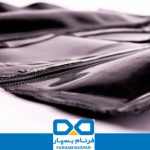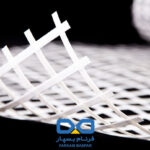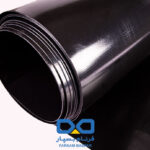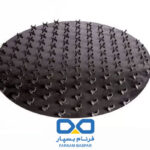
Weld the edges of geomembrane sheets and griped geomembranes
Repair damaged surfaces
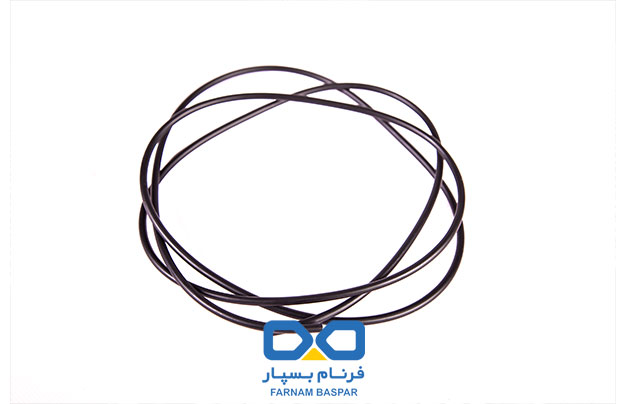
Geomembrane welding wire is a key component in ensuring reliable and durable connections for geomembrane liners, manufactured with precise technical specifications and in compliance with international standards. This product offers special advantages such as high durability and ease of installation, playing an important role in enhancing the quality and efficiency of waterproofing projects. On this page, in addition to reviewing the features and standards of the welding wire, a complete installation guide is also provided to offer engineers and contractors a smart and practical choice.
Farnam Baspar offers high-quality welding wire (extrusion welding rod) specifically designed for use with thermoplastic geomembranes such as HDPE, LLDPE, and PVC. These welding wires ensure strong, consistent, and leak-proof joints during on-site geomembrane installation.
Key Specifications:
Using Farnam Baspar’s welding wire ensures seamless integration with their geomembrane sheets, providing long-term performance in harsh environmental conditions. It is ideal for use in applications such as landfills, mining, aquaculture, reservoirs, and industrial containment systems.
Farnam Baspar’s geomembrane welding wire offers a range of technical and operational advantages that enhance the quality, durability, and efficiency of geomembrane installations. Below are the key benefits:
Advantages of Farnam Baspar Geomembrane Welding Wire:
This welding wire is designed to deliver reliable performance across demanding environments such as landfills, mining, aquaculture, energy projects, and water containment systems.
Farnam Baspar’s geomembrane welding wire is manufactured in accordance with internationally recognized standards to ensure safety, performance, and long-term durability in demanding field applications. These standards cover material composition, carbon content, oxidative resistance, and welding compatibility.
Key Standards for Farnam Baspar Welding Wire:
Compliance with these standards ensures that Farnam Baspar’s welding wire delivers consistent weld quality, strong bonding, and long-term reliability across applications in landfills, mining, water containment, aquaculture, and civil engineering projects.
The price of geomembrane welding wire can vary depending on different factors. It is always best to get the current price from the experts. You can contact Farnam Baspar to get its price in Iran.
Proper installation of Farnam Baspar’s geomembrane welding rod is essential to ensure strong, leak-proof, and durable seams. The following steps should be followed according to industry best practices and equipment guidelines:
Installation Instructions:
It is strongly recommended that all welding work be carried out by trained and certified technicians using professional equipment (e.g., Leister, Demtech) under controlled site conditions.
Selecting the correct diameter of geomembrane welding wire is essential to ensure optimal weld strength, efficiency, and compatibility with the welding process. The choice depends on several factors including sheet thickness, welding method, equipment used, and environmental conditions.
Guidelines for Choosing the Right Welding Wire Diameter:
Final Recommendation:
When in doubt, consult your welding equipment supplier or Farnam Baspar’s technical team to ensure that the selected diameter is fully compatible with your geomembrane type and installation method.
Frequently asked questions
How strong is geomembrane welding wire?
The tensile strength of geomembrane welding wire can vary depending on the specific application and the type of geomembrane being welded, but it typically ranges from 15 MPa to 25 MPa.
Is the welding wire UV resistant?
Yes, Farnam Baspar’s welding rods are manufactured with high resistance to ultraviolet (UV) exposure. This ensures that welded seams maintain their mechanical strength and watertightness even under direct sunlight and harsh environmental conditions.
Welding rods are produced from the same polymers as the geomembrane (such as HDPE or LLDPE), which provides UV resistance equal to or greater than that of the base liner material.
The incorporation of UV stabilizers prevents degradation caused by prolonged sunlight exposure, ensuring that seam quality remains intact throughout the design life of the project.
UV resistance of welding rods is verified in accordance with international testing protocols, such as ASTM G154.
In summary, UV-resistant welding rods guarantee that geomembrane seams remain durable and watertight even in demanding outdoor environments.
What is the recommended welding temperature for this wire?
The recommended welding temperature for geomembrane welding rods depends on the polymer type (HDPE or LLDPE) as well as site conditions. In general:
Ambient temperature, wind, and equipment type influence the exact setting. In colder weather, higher temperatures are usually required, while in hotter climates, lower settings may be sufficient.
Proper seam quality depends not only on temperature but also on factors such as welding speed, applied pressure, and surface cleanliness of the geomembrane.
These recommendations are generally aligned with international guidelines such as GRI GM19 and the specifications provided by welding equipment manufacturers.
In summary, achieving high-quality seams requires selecting the appropriate temperature range for the polymer type combined with proper control of all welding parameters.
How should I store the welding wire?
Proper storage of welding rods is essential to maintain their quality and performance.
Welding rods should be stored indoors and away from direct sunlight to prevent UV degradation.
The recommended storage temperature is between 5°C and 30°C. Extreme heat or cold should be avoided.
Welding rods must be kept in a dry environment. Exposure to moisture can lead to contamination and reduced weld quality.
Rolls should remain in their original factory packaging until use, ensuring protection against dust and mechanical damage.
Rolls should be placed on a clean, flat surface and kept away from corrosive chemicals or sharp objects.
In summary, correct storage practices ensure that welding rods deliver optimal weld strength and seam integrity during installation.
What is the shelf life of the welding wire?
The shelf life of welding rods depends on the polymer type (HDPE or LLDPE) and storage conditions.
When stored under standard conditions (dry environment, controlled temperature, and protected from direct sunlight), welding rods can be used for up to 10 years without loss of quality.
Prolonged exposure to UV radiation, high humidity, or excessive heat may reduce the mechanical properties of the welding rod and compromise weld quality.
For welding rods stored over extended periods, a visual inspection (to check for brittleness or surface cracks) and, if necessary, a trial weld test are recommended before installation.
In summary, when properly stored, Farnam Baspar’s welding rods remain effective and reliable for up to two years from the date of manufacture.
Do you offer bulk purchasing options?
Yes, Farnam Baspar offers bulk purchasing options for its products, including geomembranes, geogrids, and welding rods.
Customers can place large-scale orders directly from the factory, depending on project size and requirements.
Farnam Baspar’s logistics team provides solutions for large-volume deliveries via trailers, sea containers, or combined transport, depending on the project destination.
For major projects, technical consultation and supply scheduling support are also available to ensure smooth and uninterrupted execution.
In summary, bulk purchasing from Farnam Baspar is a cost-effective and reliable solution for large-scale civil and infrastructure projects.
What should I do if I encounter issues during installation?
If you encounter issues during the installation of geosynthetics (geomembranes, geogrids, or welding rods), the following steps are recommended:
If any defect is observed—such as weak seams, mechanical damage to the rolls, or improper overlaps—installation should be halted at that location to prevent further complications.
The contractor or site crew should investigate the issue and determine its cause, whether it is related to welding equipment, subgrade conditions, or human error.
Farnam Baspar’s technical team is available to provide specialized guidance for resolving installation problems. Support may include repair instructions, welding recommendations, or localized replacement procedures.
Once repaired, the area must be verified using standard quality control tests (e.g., vacuum box or air pressure testing for geomembranes, and overlap or tension checks for geogrids).
In summary, if installation issues arise, the best approach is to halt work, carefully assess the problem, and consult the manufacturer’s technical support to ensure long-term system performance and durability.
Can I return the welding wire if it doesn’t meet my needs?
Farnam Baspar is committed to supplying welding rods of the highest quality, manufactured in compliance with technical specifications. However, the return policy for this consumable product is defined as follows:
If a welding rod is found to have a manufacturing defect or does not meet the declared technical specifications, customers may return the product. After technical inspection, it will either be replaced or refunded.
If the product is unused due to mis-selection for the project or a change in customer decision, returns are only accepted if the packaging remains unopened and the product is intact.
In the case of verified manufacturing defects, Farnam Baspar covers all transportation and replacement costs. In other cases, logistics expenses are the responsibility of the customer.
In summary, Farnam Baspar’s welding rods are covered by a manufacturer’s quality warranty, but returns are only accepted if the product is unused and in its original packaging.