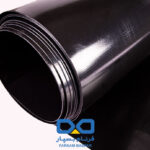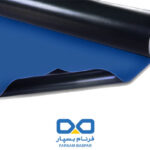
Drainage of foundations, retaining walls, backpacks and railways
Insulation and protection of certain surfaces
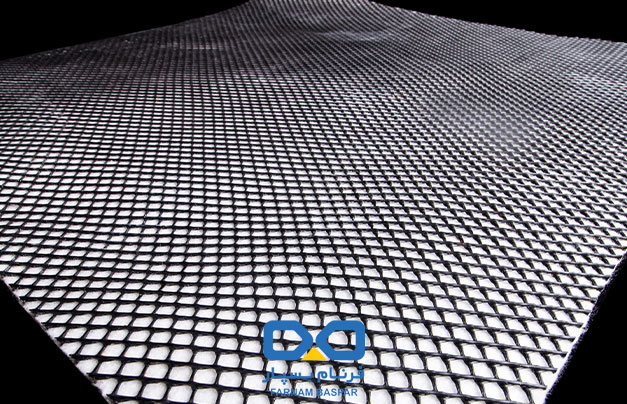
Our Geodrain sheets are manufactured with precise technical specifications and up-to-date global standards to deliver outstanding performance in drainage and soil protection. Featuring key characteristics and numerous advantages, these sheets are recognized as a reliable and cost-effective solution in civil engineering and infrastructure projects. Strict production standards ensure quality assurance and long-lasting durability of our products.
| PROPERTY | SPECIFICATION |
|---|---|
| STRUCTURE | Dimpled HDPE Sheet + Nonwoven Geotextile (PP or PET) |
| THICKNESS (TOTAL) | 8–12 mm (including dimples and textile layer) |
| CORE THICKNESS | 0.8–1.2 mm (HDPE sheet only) |
| DIMPLE HEIGHT | 8 mm / 10 mm |
| SHEET WIDTH | 1.5 – 2.0 m |
| ROLL LENGTH | 15 – 20 m |
| TENSILE STRENGTH | ≥ 400 N / 5 cm (Geotextile Layer – EN ISO 10319) |
| COMPRESSIVE STRENGTH | ≥ 150–250 kN/m² (HDPE core – ASTM D6364) |
| PERMEABILITY | ≥ 10⁻³ m/s (Geotextile – EN ISO 11058) |
| WATER FLOW CAPACITY | ≥ 1.5 L/m·s (EN ISO 12958 @ 20 kPa) |
| CHEMICAL RESISTANCE | Excellent against acids, bases, hydrocarbons |
| UV RESISTANCE | Stabilized – short-term exposure |
| TEMPERATURE RANGE | –30°C to +80°C |
| COLOR | Black (core), White or Grey (textile layer) |
| APPLICATIONS | Subsurface drainage, foundation walls, retaining walls, green roofs, tunnel lining, landfills |
Farnam Baspar’s geodrain sheets are manufactured in compliance with international standards to ensure high performance in drainage, waterproofing protection, and subsurface water management. The following key standards apply:
There are various types of geodrain systems available, such as geocomposite drains, geonets, geotextile drains, and geospacer systems. The cost of geodrain per square foot can vary depending on the specific application and requirements. You can contact Farnam Baspar to obtain the geodrain price in Iran.
Farnam Baspar’s geodrain sheets are widely used across civil, environmental, and infrastructure projects due to their high drainage efficiency, compressive strength, and ease of installation. Key customer groups include:
Farnam Baspar is one of Iran’s leading manufacturers of geosynthetic materials, including geodrain products, delivering certified quality, engineering expertise, and customer-focused service across the region. Renowned as a reliable brand in both domestic and global markets, Farnam Baspar offers innovative solutions that ensure long-term value and performance. You can contact us to inquire about geodrain prices in Iran and experience the trusted quality that sets us apart.
Frequently asked questions
How strong is geodrain?
The strength of geodrain can vary depending on the specific product and application. Geodrain is designed to provide high flow capacity for water and other liquids while also offering stability and reinforcement to the soil.
When should geodrain be used?
How is geodrain installed?
How do I choose the right geodrain for my project?
Selecting the right geodrain for a project depends on the intended application, geotechnical conditions, and hydraulic requirements. The following factors should be considered:
The geodrain must accommodate the design flow rate under applied loads and compaction. Parameters such as transmissivity and permittivity are critical in this regard.
The drainage core should resist static and dynamic loads (e.g., soil pressure or traffic loads) without collapse or deformation.
Resistance to chemical exposure, temperature variations, and biological growth must be evaluated according to the site conditions.
Final selection should be based on standard testing and geotechnical design requirements.
Ultimately, consulting with geotechnical engineers and geosynthetics specialists ensures that the chosen geodrain meets both the technical and economic needs of the project.
What is the lead time for ordering geodrain?
The lead time for geodrains depends on several key factors:
Standard geodrains are often available in stock and can usually be delivered within a few business days.
For projects requiring geodrains with special specifications (such as core thickness, profile type, or specific geotextile layers), custom production is required. Lead times in such cases typically range from 3 to 6 weeks.
Large-scale orders may require additional time for production planning and logistics coordination.
For international projects, sea or land freight and customs clearance may extend the overall delivery schedule.
In general, it is recommended to place geodrain orders several weeks before the planned installation date to avoid potential delays.
Do you offer a warranty on geodrain?
Yes, Farnam Baspar’s geodrains are supplied with a manufacturer’s quality warranty, reflecting our commitment to premium raw materials and production in compliance with international standards.
Geodrains are guaranteed for the quality of their constituent layers (polymeric drainage core and geotextile filter) as well as the integrity of the bonding between them.
Depending on the geodrain type and project conditions, the warranty period typically ranges from 1 to 5 years.
The warranty covers freedom from manufacturing defects, retention of key mechanical and hydraulic properties, and durability under normal environmental conditions.
Issues arising from improper installation or unsuitable site practices are not covered under warranty.
All geodrains are tested and certified according to recognized international standards such as ASTM, ISO, and EN, ensuring long-term product reliability.
In summary, Farnam Baspar’s geodrain warranty is focused on material quality, manufacturing integrity, and long-term drainage performance, providing confidence and assurance to both owners and contractors.
Are your geodrain sheets resistant to chemicals?
Yes, Farnam Baspar’s geodrain sheets are designed and manufactured to provide high resistance against a wide range of chemical agents.
The drainage core, typically made of high-density polyethylene (HDPE) or similar polymers, exhibits excellent chemical stability against common acids, alkalis, and salts present in soil and groundwater.
The filter geotextiles (polypropylene or polyester) used in geodrains are also resistant to most chemical compounds, preventing clogging and premature degradation.
Geodrains are suitable for applications such as landfills, industrial drainage systems, retaining walls, and subsurface projects, where exposure to chemical compounds is expected.
For prolonged exposure to highly aggressive organic solvents or specific chemicals, a chemical compatibility test is recommended prior to installation.
Chemical resistance of geodrains is evaluated in accordance with international standards such as ASTM D543 and ISO 13434.
Overall, Farnam Baspar’s geodrain sheets provide reliable chemical stability for a wide range of geotechnical and environmental engineering applications.
How long do Farnam Baspar’s geodrain last?
Farnam Baspar’s geodrains are manufactured from premium raw materials and designed according to international standards, ensuring a long service life.
Depending on the type of geodrain, applied loads, and environmental conditions, these products can last for over 50 years.
The polymeric drainage core resists static and dynamic pressures while maintaining its long-term transmissivity and flow capacity.
Both the geotextile layers and the polymeric core are resistant to common chemicals, temperature variations, moisture, and biological activity, preventing premature degradation.
Geodrains are designed for applications such as subsurface drainage, retaining walls, tunnels, landfills, and hydraulic structures, ensuring reliable performance throughout the service life of the facility.
In summary, Farnam Baspar’s geodrains are engineered to deliver durable, long-term, and dependable drainage performance in geotechnical and environmental projects.
Is special equipment required for installation geodrain?
No, the installation of geodrains generally does not require specialized or complex equipment. The process is similar to that of geotextiles and drainage geocomposites and can be carried out with proper subgrade preparation and basic tools.
The surface must be smooth, compacted, and free of sharp objects or materials that could damage the geodrain layers.
Geodrain rolls are typically unrolled manually or with light equipment. On-site cutting can be performed using simple tools such as utility knives or industrial scissors.
Geodrains are usually secured with steel pins, clamps, or by embedding edges under fill material. At overlap areas, the geotextile filter layers should be properly aligned to ensure continuous filtration and drainage.
A soil or granular cover layer is typically placed over the geodrain to provide mechanical protection and maintain effective drainage.
After installation, checks should be performed to confirm uniform placement, proper overlaps, and intact geotextile layers.
In summary, geodrain installation is a straightforward and cost-effective process, but proper execution by experienced crews is essential to ensure long-term hydraulic performance and durability.
What is your return policy for geodrain products?
Farnam Baspar manufactures its geodrains in compliance with international standards and guarantees their quality. To provide transparency and customer confidence, our return policy for geodrain products is as follows:
If a geodrain is found to have a manufacturing defect or does not meet the declared technical specifications, customers may return the product. After technical inspection, it will either be replaced or refunded.
Customized or special-order geodrains (e.g., non-standard core thickness or specific geotextile types) cannot be returned due to their tailored nature, unless a manufacturing defect is verified.
In cases of verified manufacturing defects, Farnam Baspar covers all transportation and replacement costs. For other return requests, logistics expenses are the responsibility of the customer.
How is geodrain shipped, and what are the delivery options?
Farnam Baspar’s geodrains are packaged and shipped to ensure full protection during transportation and safe delivery to the project site.
With extensive experience in both domestic and international projects, Farnam Baspar’s logistics team ensures the most efficient and reliable shipping and delivery solutions tailored to each project’s needs.
As a result, geodrains are delivered safely, reliably, and in full compliance with international shipping standards.