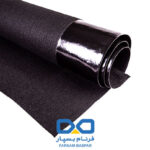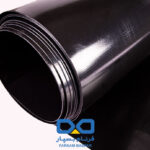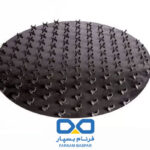
A Combogrid membrane is a filtration membrane with varying pore sizes for effective separation of particles from liquids or gases. Its applications include water treatment, wastewater management, and industrial filtration processes. This design improves efficiency in tailored separation.
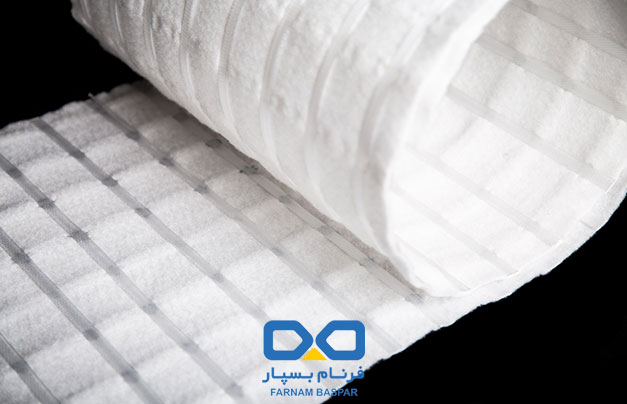
Farnam Combogrid
Integrated Solution for Soil Reinforcement, Separation, and Filtration
Farnam Combogrid is an advanced geocomposite manufactured by combining a high-performance polypropylene (PP) geogrid with a needle-punched nonwoven geotextile made from PP or PET. By integrating the functions of soil reinforcement, separation, filtration, and drainage into a single product, it provides a reliable and cost-effective solution for improving weak subgrades and enhancing the long-term performance of geotechnical structures.
The geogrid provides the primary reinforcement by confining granular aggregates, improving load distribution, and increasing the bearing capacity of the subgrade. The bonded nonwoven geotextile prevents the intermixing of aggregate and subgrade soils while allowing controlled water flow, ensuring effective filtration and drainage throughout the service life of the structure.
This integrated design reduces the required thickness of base and subbase layers, minimizes permanent deformation, extends pavement service life, and optimizes overall construction costs.
Farnam Combogrid is designed for projects requiring both reinforcement and separation/filtration, including:
Farnam Combogrid is manufactured using high-modulus polypropylene geogrids mechanically bonded to needle-punched nonwoven geotextiles. The geotextile is uniformly integrated with the geogrid to create a single, durable geocomposite system.
This engineered structure promotes effective interlock with granular materials, improves confinement, reduces deformation, and enhances the long-term structural performance of pavements and other geotechnical applications.
Farnam Combogrid products are tested in the company’s specialized laboratory in accordance with internationally recognized standards. Quality control includes comprehensive testing of:
These tests ensure consistent product quality and reliable performance under a wide range of field conditions.